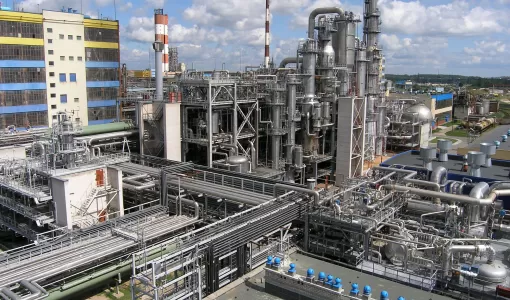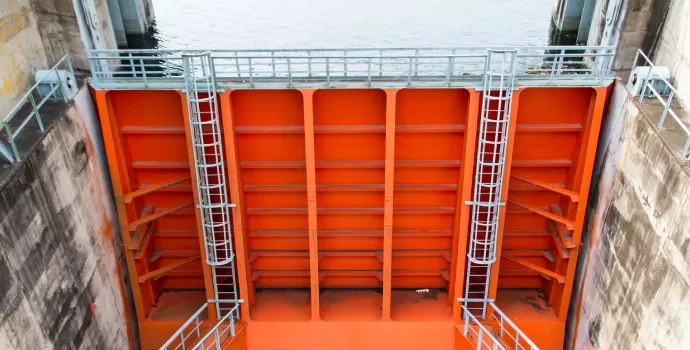
Hydraulic structures and water management facilities — including dams, levees, locks, breakwaters, piers, quays, hydroelectric units, and others — operate under conditions of water exposure, high humidity, temperature fluctuations, UV radiation, and significant mechanical loads.
Depending on their purpose and location, these structures may be exposed to both freshwater and seawater, water flows containing sand and abrasive particles, as well as cyclic freezing and thawing.
These operating conditions create increased requirements for corrosion protection and protective coatings.
Our solutions are suitable for protecting:
- Steel and concrete structures of dams, levees, locks, and hydroelectric units;
- Steel supports and frameworks of bridge crossings over waterways;
- Pipelines, pumping stations, and water treatment facilities;
- Auxiliary structures and engineering elements exposed to aggressive water environments.
The coatings are designed for use in various corrosivity categories according to ISO 12944:
- C3 (medium) environments — moderate exposure, typical of inland water management structures;
- C4–C5 (high to very high) environments — coastal, tidal, or high-humidity zones;
- CX / immersion categories — extreme exposure, including submerged or permanently wet areas.
Coatings can be applied year-round when application requirements are followed, ensuring long-term durability across all macroclimatic zones.
Standard Solutions
ARMOR Chemie® — Industrial and Protective Coatings That Truly Work
LLC “Art Industry Company” (Belarus) is the manufacturer of ARMOR Chemie® anti-corrosion coatings. We develop, produce, and implement advanced solutions for protecting metal structures and equipment from corrosion, as well as atmospheric and mechanical impacts. Our materials, created using cutting‑edge technologies and 30 years of expertise, ensure durability, reliability, and reduced maintenance costs.


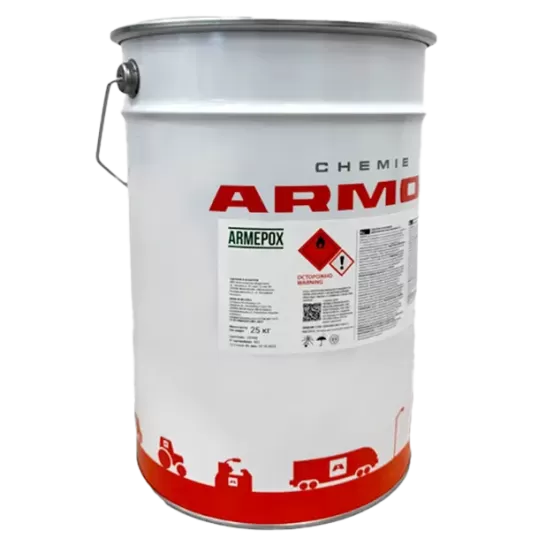
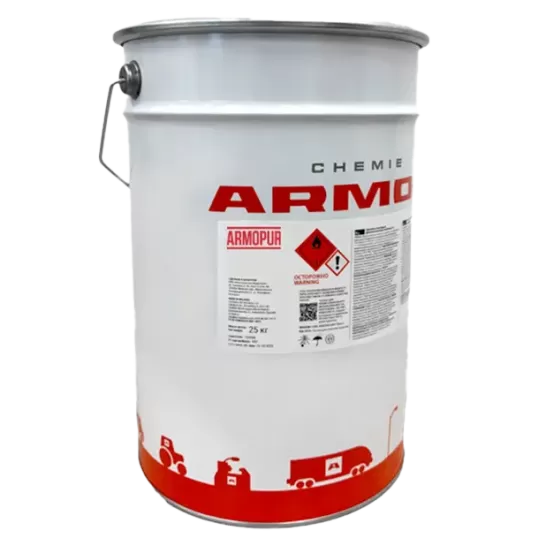

Our specialists can provide you with qualified assistance in selecting the right coating system
You can request a callback by clicking the button below, or contact us in one click by pressing the button of any convenient messenger on the panel to the right.
FAQ
Answer: Hydraulic structures are in constant contact with water and are exposed to moisture, temperature fluctuations, and mechanical stresses. These factors create high risks of corrosion and material degradation. Therefore, specialized corrosion protection coatings resistant to water, chemical reagents, and UV radiation are applied to ensure their long-term durability.
Answer: The most vulnerable elements are steel and reinforced concrete structures located in areas of alternating wetting and permanent immersion, as well as components of spillways, sluices, and water discharge facilities, gates, lock chambers, and support structures of hydroelectric equipment.
Answer: Coatings must maintain their protective properties during prolonged contact with water, exhibit high adhesion to the substrate, and be resistant to hydrodynamic loads, cavitation, and abrasion. Additionally, the ability to apply coatings under high humidity and low temperatures is important, allowing year-round application.
Answer: Modern systems provide a service life of up to 30 years, resistance to freshwater and seawater, performance in all climatic conditions, compatibility with various substrate types, and the ability to apply coatings both in factory and on-site conditions.
For coatings on hydraulic steel structures, the main standard is ISO 12944 (for steel corrosion protection by paint/coatings), with specific immersion categories (Im1–Im4) to classify exposure. If exposure is very severe (salt water, splash zone, offshore‑like) then NORSOK M‑501 is highly relevant. Surface preparation (e.g., ISO 8501‑1) and concrete coating guidelines may also apply depending on substrate.