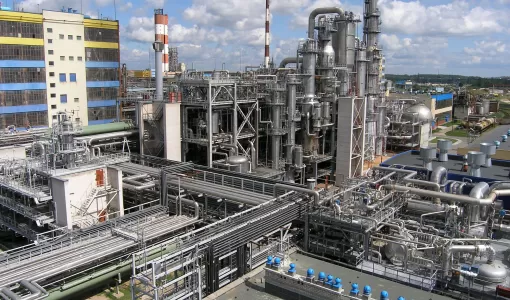
Steel structures and tank farms in the oil and gas industry operate under highly aggressive conditions. Significant corrosive impact comes from oil, petroleum products, produced water, and other corrosion agents. Additional stress factors include UV exposure, tank steaming, and the presence of abrasive particles.
Effective heavy duty corrosion protection helps reduce operational costs associated with equipment downtime and unplanned maintenance, while extending the service life of tanks and other steel structures.
Our solutions are suitable for protecting:
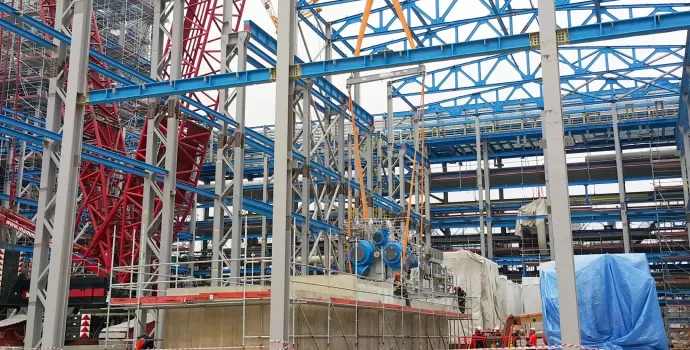
- Steel structures, concrete structures, process platforms, pipe racks, galleries, and supports (refineries, pump stations);
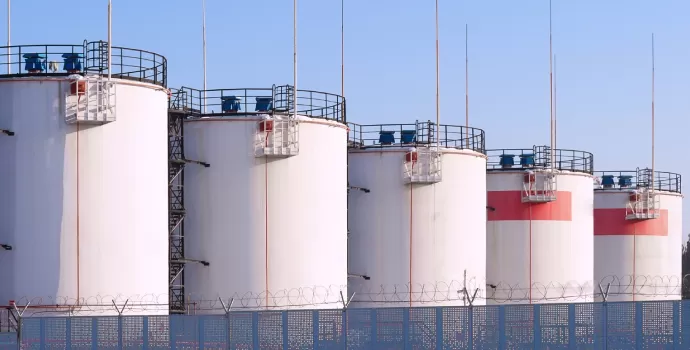
- Tanks and vessels for oil and petroleum products, including internal and external surfaces;
- Equipment, including heated units and those operating under cyclic temperature conditions.
The coatings are designed for use in various corrosivity categories according to ISO 12944:
- C3 (medium) environments — moderate exposure typical for inland industrial facilities;
- C4–C5 (high to very high) environments — coastal, high-humidity, or high-exposure areas;
- CX / immersion categories — extreme conditions, including continuous contact with water, produced water, or aggressive chemical agents.
Coatings can be applied year-round when application requirements are followed, ensuring long-term durability across all macroclimatic zones.
Standard Solutions
ARMOR Chemie® — Industrial and Protective Coatings That Truly Work
LLC “Art Industry Company” (Belarus) is the manufacturer of ARMOR Chemie® anti-corrosion coatings. We develop, produce, and implement advanced solutions for protecting metal structures and equipment from corrosion, as well as atmospheric and mechanical impacts. Our materials, created using cutting‑edge technologies and 30 years of expertise, ensure durability, reliability, and reduced maintenance costs.

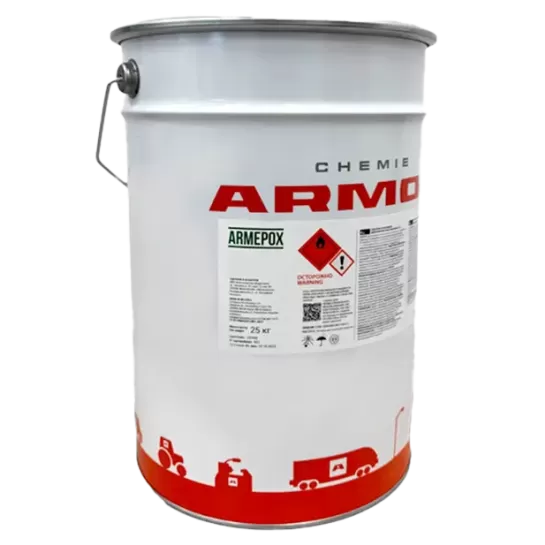
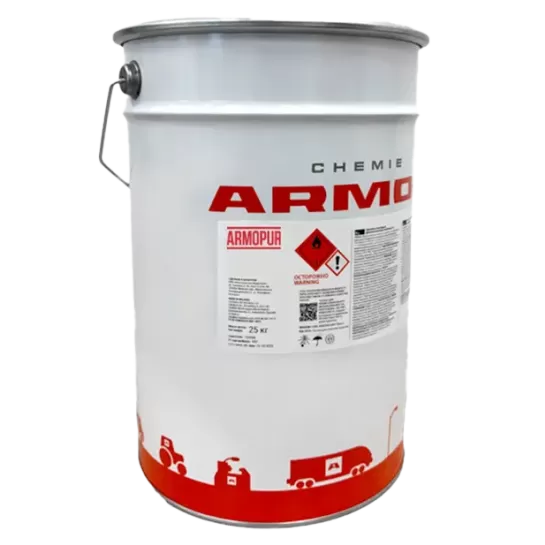

Our specialists can provide you with qualified assistance in selecting the right coating system
You can request a callback by clicking the button below, or contact us in one click by pressing the button of any convenient messenger on the panel to the right.
FAQ
Answer: Steel structures in the oil and gas sector operate in highly aggressive environments: they are exposed to oil and petroleum products, mineralized water, chemical reagents, abrasive particles, solar radiation, and temperature fluctuations. These factors accelerate metal degradation and require the use of reliable corrosion protection to ensure the long-term durability of assets.
Answer: Corrosion protection is required for steel and concrete structures of buildings and process modules, pipe racks, galleries, and supports, tanks and vessels for oil and petroleum products, aboveground, underground, and subsea pipelines, heated equipment, as well as steel piles.
Answer: The internal surfaces of tanks are protected with high build epoxy and chemical resistant coatings, which are resistant to crude and refined oil, fuel oil, produced and seawater, cleaning liquids, and reagent solutions. Atmospheric exposure coatings are used on external surfaces to provide protection against oil spills, UV radiation, and mechanical impacts.
Answer: Aboveground pipelines are protected with coating systems similar to those used for steel structures exposed to the atmosphere. Underground and subsea pipelines are coated with moisture-resistant epoxy systems that provide protection against soil salts, alkalis, and freshwater and seawater. Heated equipment is protected with high temperature resistant coatings, capable of withstanding continuous exposure up to +350 °C and short-term exposure up to +400 °C, while maintaining decorative properties.
Answer: Steel piles are protected with epoxy coating systems that reduce frost heave forces, are resistant to mechanical damage, and allow achieving the required dry film thickness (DFT) in a single coat, reducing labor costs. Water- and moisture-resistant epoxy coatings are applied to sheet piles of quay walls, providing long-term corrosion protection under challenging operating conditions.
NPZ (oil refining plant) — an industrial facility where anticorrosion coatings protect tanks, process equipment, pipelines and metal structures from the impact of oil, petroleum products and aggressive chemical media.
LPDS (line-production dispatch station) — a node of main oil pipelines with pumping, filtration and control‑measurement equipment; coatings prevent corrosion of equipment, overpasses and tanks.
RVS (vertical steel tank) — a large‑capacity container for storing oil, petroleum products and water, requiring multi‑layer anticorrosion protection of the internal and external surfaces.
RVSP (vertical steel tank with pontoon) — a tank with a floating roof to prevent oil evaporation; internal coatings must be chemically resistant and antistatic.
RVSS (vertical steel modular tank) — a dismantlable construction for temporary storage of fuel and petroleum products; requires fast‑drying and adhesion‑resistant coatings.
RGS (horizontal steel tank) — a container for storing fuel, heavy fuel oil and chemical reagents; internal and external coatings resistant to thermal cycles and aggressive environments are used.
Antistatic coating — a paint or polymer layer that prevents the buildup of static electricity on the surfaces of tanks and pipelines.
Anticorrosion protection of tanks — a set of measures and coating systems for preventing corrosion of metal structures in contact with oil, gas, water and chemicals.
Internal anticorrosion coating — a specialized system based on epoxy or polyurethane formulations for protecting the internal surfaces of tanks and pipelines.
Protection of vessels and metal structures in the oil‑gas complex — the use of paint and polymer coatings for long‑term operation of tanks, pipelines, overpasses and process modules in aggressive environments.
Tank and vessel coating — multi‑layer primer, epoxy and polyurethane enamel systems providing durable protection of internal and external surfaces. Paint materials resistant to oil, diesel fuel and chemically active substances, used for internal and external protection of metal tanks.