Specifics of painting agricultural machinery
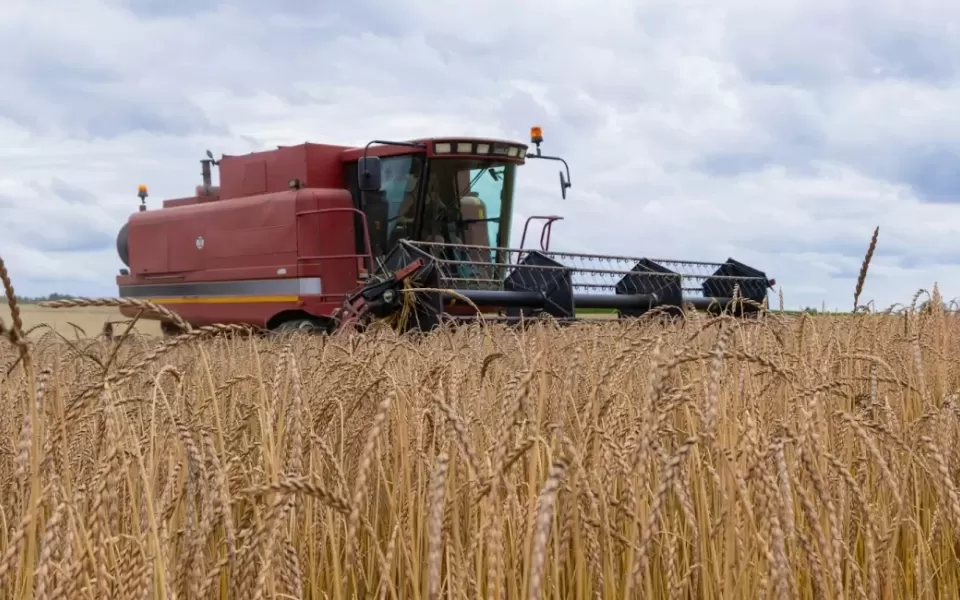
Painting agricultural machinery is one of the most complex segments of industrial painting, where simultaneous requirements for enhanced anti‑corrosion protection of metal and high visual quality are imposed. Unlike construction metal structures and classic mechanical engineering, it is necessary to consider the complex geometry of products, the variety of materials, and extremely aggressive operating conditions.
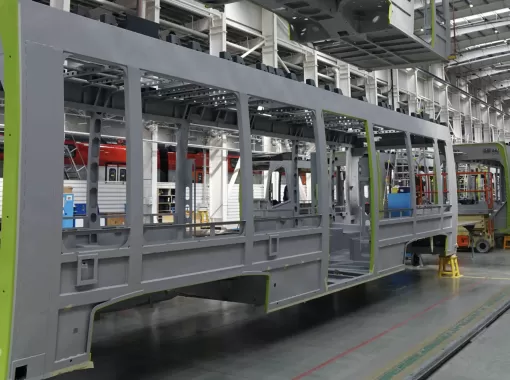
Agricultural machinery consists of large‑size constructions with complex spatial geometry and many hard‑to‑reach areas. Parts are made from thick‑walled metal using laser cutting, welding and machining. Painting is often performed on partially assembled units, where components sensitive to temperature and chemical exposure are present.
Additional difficulty is created by the combination of different types of substrates. In the construction, the following can be used simultaneously:
- structural steel and cast elements
- plastics (thermo‑ and reactive plastics)
- composite materials
- pre‑painted or pre‑treated units
In such conditions the use of a universal paint system is impossible. Selection of comprehensive protective coating systems that ensure adhesion to heterogeneous bases is required.
Key requirements for the coating
Agricultural machinery coating is operated in conditions of increased aggressiveness. It is constantly exposed to moisture, dirt, fertilizers, abrasive particles, as well as agro‑chemicals, fuel and oils. Additional load is created by intense ultraviolet radiation and prolonged storage of equipment in open areas.
In such conditions industrial paint coating must provide:
- high anti‑corrosion protection, including protection of edges and weld joints
- resistance to chemicals and aggressive environments
- durability against mechanical wear and abrasion
- color and gloss stability under UV exposure
- uniformity of coating and good hiding power
For modern self‑propelled equipment (combines, tractors, sprayers) the requirements for decorative properties of the coating practically approach automotive painting standards.
Surface preparation — the basis of coating durability

Surface preparation is a key stage, directly determining the service life of the anti‑corrosion coating. Even high‑quality materials will not deliver results without a properly prepared substrate.
Main tasks include removal of oils, technological contaminants and scale, as well as creating a surface with the required roughness and adhesion.
The following preparation steps are used in industrial practice:
- degreasing (water‑based or solvent‑based systems)
- shot blasting or sandblasting of metal
- chemical surface preparation (phosphating)
Phosphating remains the standard for improving adhesion and corrosion resistance. For moderate requirements, iron phosphate is used, and for higher demands, zinc phosphate.
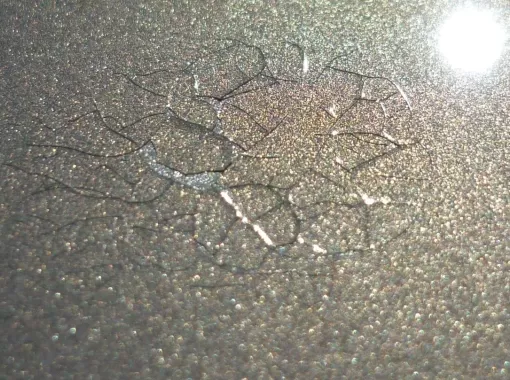
Underestimating surface preparation is one of the most common reasons for premature failure of paint coatings.
Coating systems: from alkyd to high‑technology
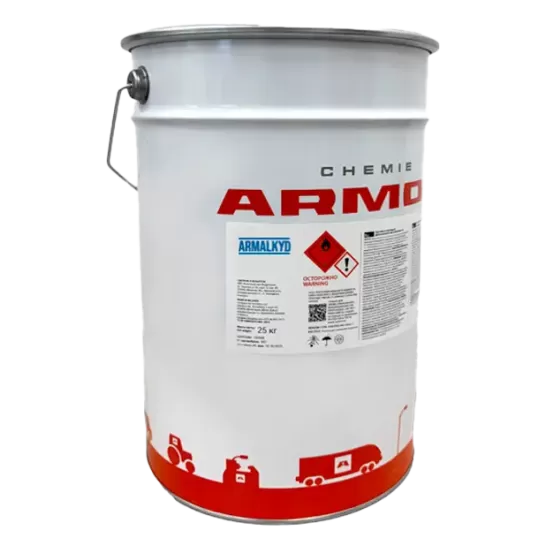
The market still includes traditional systems based on alkyd and PVB primers with alkyd enamels. Their main advantage is low cost and ease of application. However, such coatings have limited durability and low resistance to chemicals and ultraviolet light.
Modern paint systems for agricultural machinery are based on more advanced solutions. Epoxy primers with high adhesion and anti‑corrosion properties, as well as electrophoretic coatings (E‑coat), are used as primers, providing uniform coverage of the entire product surface.
Finish coatings are usually based on polyurethane enamels, including acrylic‑polyurethane systems, as well as high‑solid and water‑based materials.
Most common painting schemes:
- epoxy primer + polyurethane enamel
- single‑layer direct‑to‑metal systems for simplified solutions
- electrophoretic priming (E‑coat) + 2‑K finish
Using multilayer coating systems significantly extends equipment service life and reduces maintenance costs.
Methods of applying paint coatings
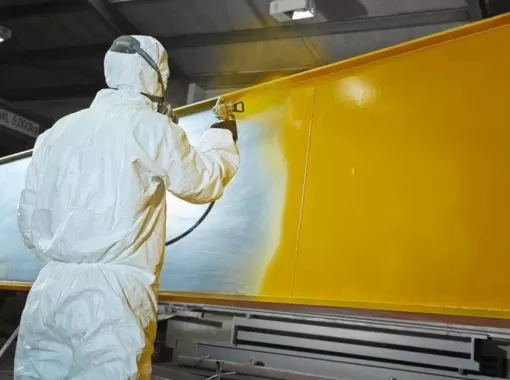
Choice of application technology directly influences coating quality, material consumption and painting line productivity.
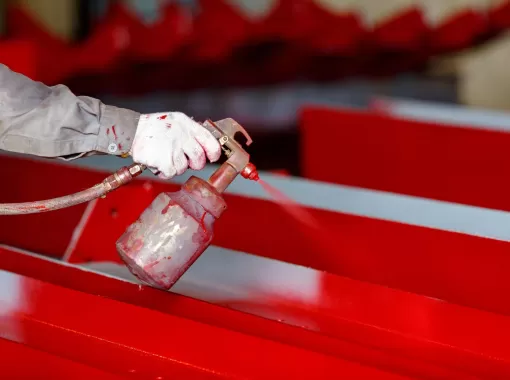
Most common methods:

Drying of agricultural machinery requires a special approach due to the large mass of items and the presence of sensitive components. Moderate temperature regimes are applied, usually in the range of 100–120 °C.
Use of low‑temperature hardeners enables quality coating formation without risk of deformation of structures or damage to parts. Control of the drying regime is a critical factor for quality stability.
Production scale and painting technologies
Painting technology for agricultural equipment substantially depends on the production level.
Small enterprises typically use simple surface preparation schemes, solvent‑based paints, and manual application. The primary priority is reduction of capital costs.
Mid‑size productions implement more technological processes: shot blasting, metal phosphating, use of 2K systems, and partial automation.
Large manufacturers use full‑cycle lines, including electrophoretic priming, automated painting chambers, and coating quality control at all stages. This ensures high repeatability and long coating service life.
Typical mistakes and practical recommendations
In practice, painting of agricultural machinery often encounters typical problems related to application technology and material selection.
Most common mistakes:
- insufficient coating thickness on edges and welded joints
- overconsumption and formation of runs when working with high‑solid materials
- high paint losses due to incorrect equipment settings
- incomplete coverage of internal cavities
To eliminate them, epoxy primers with high hiding power are used, equipment settings are corrected, electrostatic technologies are introduced, and immersion or electrophoretic methods are employed.
Painting economics: coating life‑cycle calculation
When selecting a painting system, it is important to consider not only the cost of paints and coatings. Operational indicators are much more significant.
Key factors influencing economics:
- material consumption per square meter
- transfer coefficient and losses during application
- service life of anticorrosive coating
- repair and repainting costs
Modern industrial painting systems, such as epoxy primers combined with polyurethane enamels or electrophoretic coatings, demonstrate lower total cost of ownership due to increased service life.
Conclusion

Painting agricultural machinery is a comprehensive technological process that combines requirements for anticorrosion protection, decorative properties of the coating, manufacturing technological constraints, and economic efficiency.
The current industry trend is the shift from alkyd coatings to modern systems: epoxy primers, polyurethane enamels, and electrophoretic technologies. At the same time, the key factor remains not only the selection of paint materials but also the quality of surface preparation, adherence to application technology, and control of all painting stages.