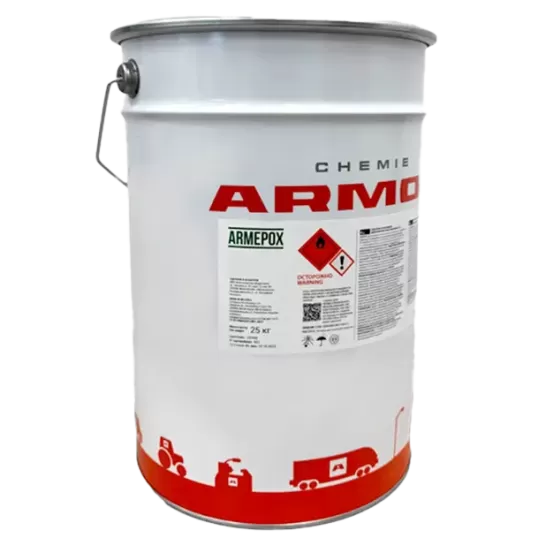
Epoxy barrier coating reinforced with iron slag (MIO). Provides reliable protection of metal surfaces as an intermediate barrier layer in multilayer systems.
epoxybarrier propertiesgray
Epoxy barrier coating reinforced with iron slag (MIO). Provides reliable protection of metal surfaces as an intermediate barrier layer in multilayer systems.
Answer. An intermediate primer is a layer applied between the primary primer and the finish coating. Its main purpose is to increase the overall thickness and barrier properties of the system, improve interlayer adhesion, and protect the metal from moisture and oxygen ingress. Such coatings are often called barrier primers (барьерные праймеры) because they form a dense, impermeable layer. In multi‑layer anticorrosion systems, intermediate primers are especially important for equipment, bridges, railcars, and structures operating in aggressive environments.
Answer. Unlike zinc‑enriched primary primers that provide cathodic protection, barrier primers operate on the principle of metal isolation from moisture and oxygen. They form a dense impermeable film with low porosity and minimal water permeability. Barrier coatings are most often based on epoxy resins with a high solids content and are used to increase system durability and protect against underfilm corrosion. Such primers are indispensable in long‑service‑life systems (ISO 12944 C4–C5, Im1–Im3).
Answer. The basis of barrier and intermediate primers is most often composed of epoxy systems. Epoxy variants provide the best barrier properties and chemical resistance.
Answer. Sanding primer is an intermediate layer intended for surface leveling and defect elimination prior to the application of a decorative coating. Acrylic‑polyurethane filler‑surfacers for sanding are widely used in transport engineering, painting passenger rail transport, buses, trolleybuses, trams and automotive repair, where high visual quality is required. They provide good filling, fast drying and easy sanding without fouling the abrasive. After treatment, a smooth, dense substrate is created for applying a polyurethane or acrylic finish layer.
Answer. When selecting an intermediate primer, it is important to consider:
type of the primary primer (zinc‑filled, epoxy, etc.);
required film thickness and protection class according to ISO 12944;
service conditions (humidity, chemicals, temperature, UV);
application method (airless, pneumatic, brush);
inter‑coat drying time, overcoating, and compatibility with the finish coating.
For severe industrial conditions (C4–C5, Im1–Im3), high‑solids epoxy barrier primers are recommended, and for automotive engineering and products with decorative requirements – acrylic‑polyurethane sandable primers. Proper combination of these layers guarantees high corrosion resistance and excellent visual quality of the surface.