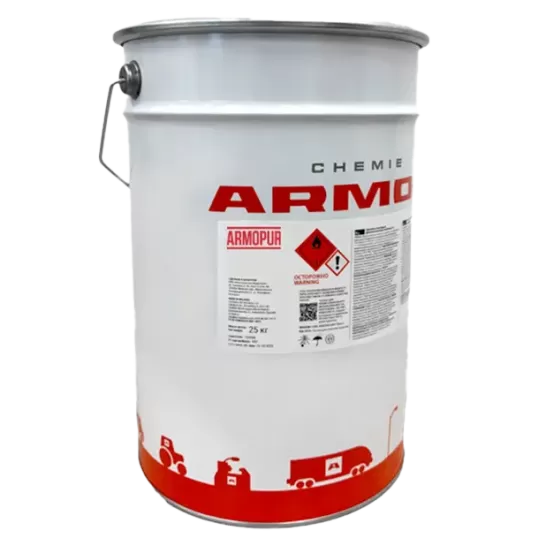
Two‑component acrylic‑polyurethane high‑gloss lightfast enamel for coating equipment and metal structures with a bright decorative effect.
acrylic‑polyurethanehigh weather resistanceColor‑matched to RAL, NCS and the sample
Two‑component acrylic‑polyurethane high‑gloss lightfast enamel for coating equipment and metal structures with a bright decorative effect.
If the old coating shows no signs of corrosion, all contaminants must be removed from the surface, degreased and dust‑free before painting. Apply 1‑2 coats primer‑finish coating ARMOPUR DTM 162, with a total thickness of 60‑80 µm. If there are local areas of corrosion damage to the coating, the rust must be removed and the surface primed with epoxy primer ARMEPOX® PRIMER 041, after which a polyurethane enamel should be applied. The use of polyurethane primer‑finish coating, ARMOPUR DTM 162, 2 coats with a total thickness of at least 100 µm, is permitted.
Your concerns are justified, polyurethane coatings contain strong solvents that can degrade the existing coating. This manifests as wrinkling, swelling or cracking. To avoid this, a small quick test should be performed. Take a rag and thoroughly saturate it with the proprietary solvent Thinner 3, which is used for diluting polyurethane coatings Armor CHemie. Then place the wet rag on the surface to be painted to slow solvent evaporation; the rag can be covered with polyethylene. After 5 minutes inspect the surface, and if no blistering, delamination or swelling is observed, the compatibility test is passed. At low temperatures, the wetting time should be increased.
No, zinc‑filled primers are categorically not recommended for application over old coating or contaminants, as they require application only to clean, rough metal to provide galvanic (cathodic) corrosion protection; otherwise they will not function and may delaminate. The old coating must be completely removed to the metal (by sandblasting or mechanically).